
Scanner App vs eBay Sold Listings: Which Gives Better Card Values?
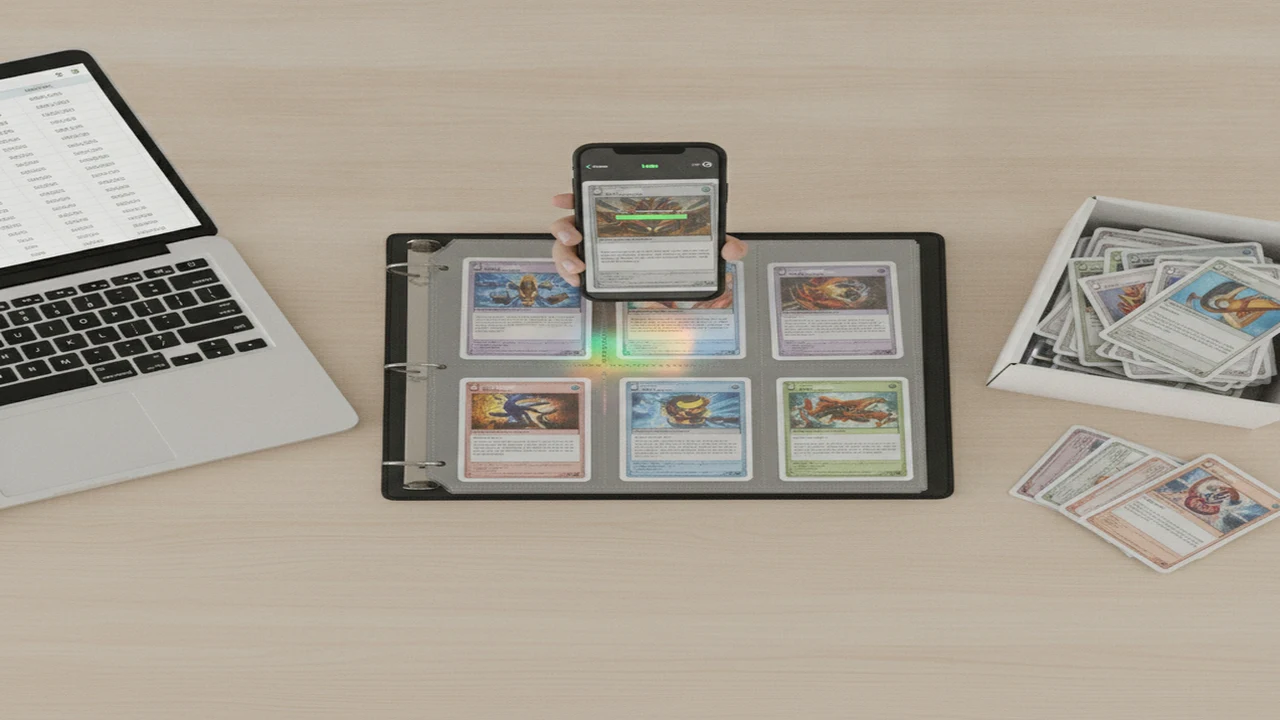
A scanner estimate and a completed eBay sale are not the same kind of evidence. The scanner gives you an organized starting point, often within seconds. The sold listing shows what one buyer paid, but only becomes useful after you check the card number, variant, language, condition, grade, shipping and sale date.
We would not price a valuable card from either source alone. In everyday testing, scanning is best for finding the handful of cards that deserve attention. Manual sold research is slower but better for deciding what to list, insure or submit for grading. That distinction matters more than which Pokemon card price checker has the nicest interface.
Quick answer: eBay sold listings are the stronger manual check when you match the exact card, variant, condition and professional grade. A scanner app is much faster for identifying and estimating an entire binder or shoebox. The practical workflow is to scan first, then verify expensive, graded or unusual cards against several recent comparable sales.
What are scanner app values and eBay sold listings actually measuring?
A scanner value is an estimate connected to a card identified from a camera image. Depending on the trading card scanner app, that estimate may be based on marketplace sales, price guides or an internal database. Some apps show separate raw and graded values, while others provide one number without exposing the transactions behind it.
An eBay sold value is evidence from an individual completed sale. It is not automatically the card's universal market value. A near-mint single, a scratched copy, a PSA slab and a five-card lot can all produce different results for the same card name. Accepted offers may also make the visible price less informative.
Do not confuse active asking prices with sold prices. Sellers can ask any amount. eBay also provides its own card price guide and scanning tools. According to eBay in 2021, its scanning tool could reduce listing time by up to 50 percent by filling in card details and pricing information.
Which method gives the more accurate card value?
For one valuable card, several recent exact-match sold listings usually provide the better answer. You can inspect photos, certification numbers, sale dates and whether the listing included extras. A single result is not enough because auctions can end unusually low and fixed-price sales can land unusually high.
A Pokemon card value scanner wins on speed and consistency. It can identify hundreds of cards, attach estimates and create a shortlist without requiring a separate search for every common. The trade-off is that an average may combine mismatched conditions or lag behind a fast-moving market.
Our rule is simple: use a scanner for triage, not unquestioned final pricing. When a card appears valuable enough to sell individually, compare multiple recent sales and reject results that do not match its exact printing and condition.
How should graded and raw card prices be compared?
Raw cards should be compared with raw cards. PSA, CGC and BGS slabs should be checked against the same grading company and numerical grade whenever enough sales exist. A PSA 10 price cannot be applied to a clean-looking raw copy, and equivalent numbers from different grading companies may sell for different amounts.
A PSA card value checker is useful only if it separates grade-specific evidence. Check certification details and look for outliers caused by rare labels, qualifiers, older holders, poor listing titles or questionable authenticity. For thinly traded cards, widen the sale period but give recent comparables more weight.
AI card pre-grading can flag obvious centering, corner or edge concerns, but it remains a screening aid. An ordinary phone photo may hide scratches, dents, surface wear, cleaning or alteration. It cannot guarantee a professional grade.
Which option works better for a binder or shoebox workflow?
For a large collection, start by scanning in good, even light. Confirm the set number and variant after every identification, especially for reverse holos, promos and similar artwork. Sort likely bulk separately, then place cards with meaningful estimates into a review stack.
Next, total the collection as a rough portfolio rather than guaranteed resale income. Manually check the review stack against recent sold listings, accounting for fees, shipping and realistic condition. Our guide to scanning a binder of Pokemon cards efficiently covers the physical setup and page-by-page routine.
For instant camera card identification, graded context and collection totals, you can card grading context tool. It is most useful as the first pass in this workflow, not as permission to skip condition checks.
How do Card Value Scanner, ScanDex, Foloy and Dex compare?
The best TCG scanner app depends on whether you need pricing evidence, collection organization or support for several games. Card Value Scanner (CardValueScanner.io) emphasizes photo identification, market prices, graded context and collection totals. Manual eBay research remains the clearest route to transaction-level evidence when the listing is an exact match.
ScanDex combines Pokemon card scanning with live market information, trading research and collection tools. Foloy is oriented toward multi-franchise scanning with set and rarity sorting. Dex provides camera scanning, a Japanese card database, set statistics and trade and duplicate folders.
The available competitor listings do not identify every marketplace source or confirm graded-value comparisons. They also do not establish batch scanning, export support or the exact transaction evidence used for each displayed price.
What do subscriptions, permissions and setup cost in practice?
Free-tier usefulness matters more than a short trial that immediately pushes a subscription. Before paying, test whether the scanner recognizes your sets, lets you correct mistakes and retains enough collection entries to judge the workflow. Our review of whether Pokemon card scanner subscriptions are worth it explains when recurring cost starts making sense.
A camera-based app will need camera access, and importing existing pictures may require photo-library access. Check the actual iPhone permission prompt rather than assuming full-library access is necessary. Also confirm whether an account is required, whether collection data syncs to a server, and whether deletion or export controls are available. App permissions and terms can change.
The provided iOS listing for Card Value Scanner: TCG App shows 3.9 out of 5 from 7 ratings. Seven ratings are too few to settle reliability, support quality or subscription value, and the score can change.
When is the iPhone scanner app worth installing?
An iPhone scanner is worth considering when you regularly buy collections, maintain a Pokemon card portfolio tracker or need repeat checks across many cards. Features such as eBay sold context, PSA, CGC and BGS value views, AI pre-grading and collection tracking can reduce repetitive searching.
The card pre-grade app also covers Pokemon, Lorcana and One Piece. Test identification and the free tier before accepting a subscription. Someone with five or ten cards may save more time and money by using manual sold searches instead.
If you are comparing a wider field, see our tested guide to the best Pokemon card scanner apps worth paying for.
What are the limitations of scanner prices and sold listings?
Neither method removes judgment from valuation. Treat every estimate or completed sale as one piece of evidence, particularly when a card is scarce, altered, mislabeled or difficult to grade from photos.
- A Pokemon card scanner can misidentify similar artwork, set numbers, reverse holos, promos or language variants.
- A completed sale is not a fair comparable when condition, grade, shipping, lot size or accepted-offer details differ.
- PSA graded card values should not be applied directly to raw cards or equivalent-looking CGC and BGS grades.
- Thinly traded cards may have too few recent sales for either a scanner estimate or one eBay result to be dependable.
- Marketplace coverage, refresh timing, subscription terms and app permissions can change after review.
- AI card pre-grading cannot detect every surface flaw, alteration or authenticity issue from an ordinary phone photo.
- The provided iOS rating is based on only 7 ratings and is not strong evidence of reliability.
- Competitor listings do not confirm every price source, export option, batch-scanning feature or graded-value comparison.
Should you use a scanner app or eBay sold listings?
Pick scanning when speed, collection totals and repeat checks matter. Pick manual sold listings when you have only a few cards or need a defensible final price. For anything valuable enough to sell, insure or grade, use both methods.
Card Value Scanner is the softer recommendation for binder and shoebox triage because it combines identification with pricing and collection organization. It should narrow your workload, while several recent exact-match sales provide the final reality check.
Comparison
| Method or app | Best use | Price-source clarity | Graded-price context | Collection tools | Main trade-off |
|---|---|---|---|---|---|
| Manual eBay sold listings | Final pricing for individual cards | High when exact completed listings are inspected | Grade-specific searches are possible | Limited manual organization | Slow and easy to misread without careful matching |
| Card Value Scanner | Fast binder or shoebox triage | Includes market pricing and eBay sold context | PSA, CGC and BGS context is listed | Collection totals and tracking | Estimates still require manual verification |
| ScanDex | Pokemon scanning and trading research | Live market information is mentioned, but marketplaces are not named | Graded comparisons are not confirmed | Collection management and personal wishlist | Underlying transaction evidence is unclear |
| Foloy | Collections spanning several TCG franchises | Specific price providers are not identified | Graded values are not confirmed | Set and rarity sorting | Less clarity about pricing sources and exports |
| Dex | Pokemon catalogs, sets and trading organization | eBay sold evidence is not claimed | Graded values and AI grading are not claimed | Trade and duplicate folders plus set statistics | Better fit for cataloging than final sale pricing |
Limitations
Price data ages quickly. A reasonable estimate today can become stale after a reprint, tournament result, influencer-driven spike or broader market change.
Condition remains the largest everyday source of disagreement. Scanner photos and sold-listing thumbnails rarely reveal every defect, so buyers may value the same raw card differently.
Frequently Asked Questions
Are eBay sold listings reliable for Pokemon card values?
eBay sold listings are reliable when several recent sales match the exact card, variant, condition and grade. One completed sale should not be treated as the market by itself.
Does Card Value Scanner use real eBay sold card prices?
Card Value Scanner presents eBay sold context, but users should inspect recent exact-match listings before setting a final price. Visible transaction details are more useful than an unexplained average.
Can Card Value Scanner work as a PSA card value checker?
Card Value Scanner lists PSA graded context and can help with an initial comparison. Card Value Scanner does not remove the need to match the exact PSA grade and card variant.
Is Card Value Scanner useful for raw, CGC and BGS graded cards?
Card Value Scanner lists raw and graded context, including CGC and BGS. Card Value Scanner users should avoid transferring a slab value directly to a raw card.
What permissions does Card Value Scanner need?
Card Value Scanner needs camera access for live scanning and may request photo access for image imports. Users should check the current iPhone permission prompts and privacy terms before allowing broader access.
Is Card Value Scanner worth a subscription for a large binder?
Card Value Scanner may be worth it when repeated scanning, collection totals and saved tracking replace hours of manual searches. Users should test recognition accuracy and free-tier limits before subscribing.
Can Card Value Scanner replace manual condition checks?
Card Value Scanner cannot replace an in-hand condition review or professional grading. Phone images may miss dents, scratches, cleaning, alterations and authenticity concerns.