
Best Pokemon Card Scanner Apps Worth Paying For
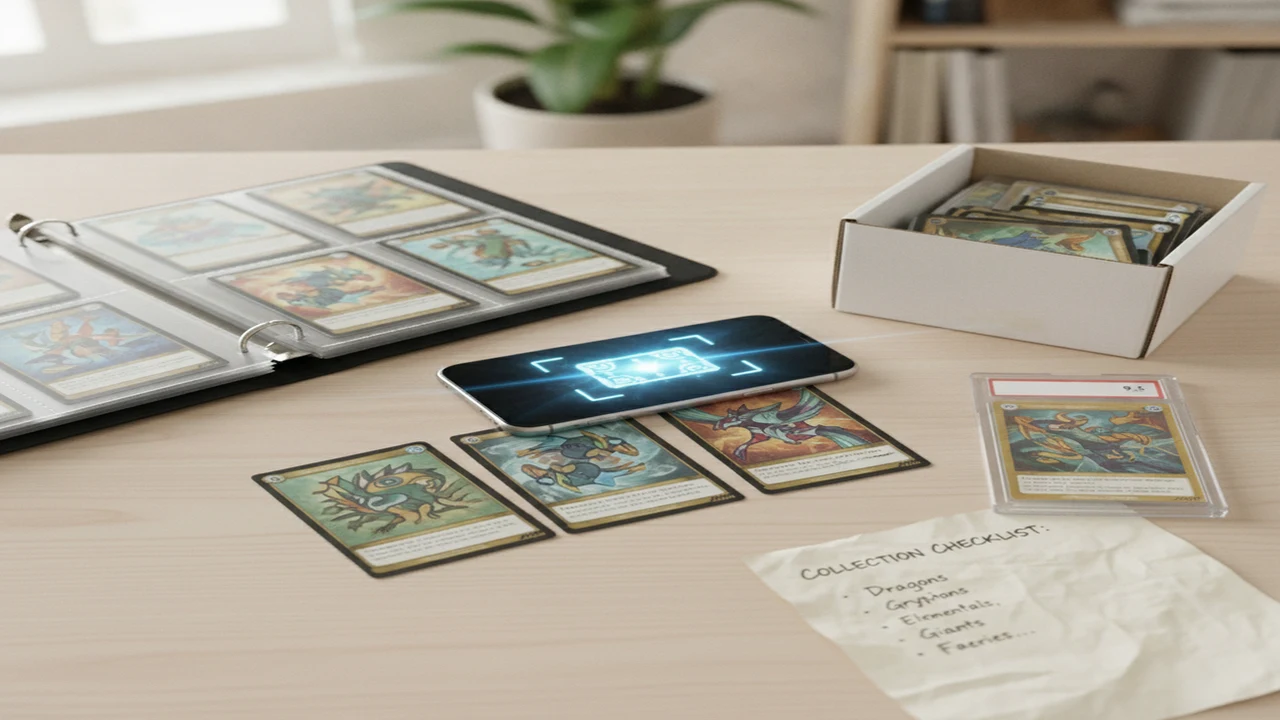
A worthwhile Pokemon card scanner should do more than recognize Pikachu through a phone camera. It needs to match the correct set, card number and printing, show evidence behind its Pokemon card market value, separate raw cards from graded copies and keep a collection organized without hiding basic tools behind an unclear subscription.
We compared these apps around everyday collector jobs: checking a loose card, working through binder pages, sorting a mixed shoebox and tracking cards across multiple games. Camera recognition and AI card pre-grading remain estimates. Neither can authenticate a card, detect every alteration or replace professional grading from PSA, CGC or BGS.
Quick answer: Card Value Scanner is our tentative paid pick for collectors who regularly need real eBay sold card prices, raw-versus-graded comparisons and collection totals. HoloDex makes more sense for broad TCG portfolios, while Acorn is stronger for Pokemon set tracking. Casual users should test each free tier before accepting a trial or subscription.
Which Pokemon card scanner apps are worth paying for?
The comparison table ranks four different approaches rather than declaring every paid plan essential. Our overall paid pick combines instant camera card identification with sold-price and graded-value context. You can review its current feature set and plan terms on the card collection value tracker before installing anything.
HoloDex is the broader TCG collection tracker, Acorn TCG Card Scanner is the set-focused choice, and the App All Day scanner covers simpler Pokemon lookups and watchlists. Features in the table reflect the supplied listings and our practical workflow checks. When a listing does not mention a capability, we label it as unspecified rather than claiming the capability is unavailable.
No app earned a blanket recommendation for every collector. Paying is easiest to justify when you scan cards frequently, compare raw and graded values, or need totals for a large collection. A person checking five cards after opening a pack will usually get enough from a free tier or ordinary marketplace searches.
How did we judge the best Pokemon card scanner app?
We approached the review as collectors would, using loose cards, sleeved binder pages and a mixed shoebox rather than ideal promotional images. We looked for quick recognition, correct set and card-number matching, sensible handling of visually similar printings and a workflow that did not require excessive tapping after every scan.
Pricing received equal weight. A useful Pokemon card price checker should identify whether a figure comes from completed sales, active listings, a marketplace estimate or another calculation. Those sources are not interchangeable. TCGplayer is a common reference for US market pricing, while Cardmarket can be more relevant to European buyers and sellers. Harder-to-price or graded cards often require recent auction and eBay evidence.
We also examined multi-card scanning claims, collection totals, duplicate handling, portfolio organization, export options, camera and photo permissions, account requirements, trial language and cancellation friction. We did not assign invented accuracy percentages because lighting, sleeves, card language and the exact test group can change the result substantially.
Why is Card Value Scanner the best overall paid pick?
graded card value checker has the most convincing feature mix for collectors who want identification and valuation in one place. Its listed tools include camera-based recognition, real eBay sold card prices, PSA graded card values, CGC graded card values, BGS graded card values, AI card pre-grading and collection totals.
The sold-price context is the key advantage. An asking price can remain online for months without proving that a buyer will pay it. Completed sales provide better evidence, although users must still compare the same printing, language, condition and grade. Separating raw and graded references also reduces the risk of valuing an ungraded binder card as if it were a high-grade slab.
In binder and loose-card checks, the identification workflow was useful as a starting point, but we still had to verify set symbols, card numbers, variants and condition. AI card pre-grading can help prioritize cards for closer inspection. It should not be treated as authentication, a guaranteed grade or a promise that grading fees will be recovered.
The subscription is most likely worth it for an active collector, seller or trader who repeatedly performs those comparisons. Occasional users should begin with the free access available at the time and inspect the current iOS plan details on the CGC card price checker before agreeing to a renewal.
When is HoloDex the better TCG collection tracker?
HoloDex is the more natural fit when portfolio breadth matters more than deep Pokemon-specific sold-price analysis. Its described strengths include fast TCG scanning, collection portfolios, real-time card values and profit and loss tracking. That combination can help collectors who think about an entire portfolio rather than one card at a time.
Profit and loss figures still depend on accurate purchase costs and a realistic valuation source. A rising app estimate does not mean a card can be sold immediately at that amount, particularly after marketplace fees, postage and condition disputes.
The supplied listing does not specify sold-only eBay analysis, separate PSA, CGC and BGS value comparisons, or collection-data exports. That is not proof that these tools are absent. It means a buyer should confirm them inside the free tier or with the developer before choosing an annual subscription.
Is Acorn TCG Card Scanner better for set completion?
Acorn TCG Card Scanner is easier to recommend to collectors whose main goal is finishing Pokemon sets. It combines quick Pokemon price checks with broad catalog coverage, set tracking and portfolio organization. Cardmarket market data may also make it more useful to European collectors than an app centered entirely on US pricing.
A Pokemon set completion tracker needs to distinguish ordinary cards from reverse holos, promotional releases and other variants. Even when a scan finds the correct character immediately, users should verify the set number and printing before marking a slot complete. This is especially important when processing multiple cards from a binder.
Acorn's listing mentions PSA population reports, which can provide scarcity context for graded cards. It does not claim AI pre-grading, CGC or BGS values, or sold-only eBay comparisons. Buyers should treat those as unconfirmed listing gaps, not confirmed missing features.
Is Card Value Scanner for Pokemon by App All Day enough for casual collectors?
Card Value Scanner for Pokemon by App All Day covers a narrower and potentially simpler job. It provides access to a Pokemon card database, card price monitoring and a personal watchlist. That can be enough for someone who wants to identify occasional pulls and watch a small number of cards without building a detailed Pokemon card portfolio tracker.
Its listing does not advertise graded values, AI pre-grading, multi-card capture or collection export. A casual user may not miss those features, but a collector cataloging hundreds of cards could outgrow a lookup-and-watchlist workflow quickly.
The practical decision depends on price and frequency. Test whether the free tier recognizes the sets you own, displays a relevant regional market and saves enough watchlist entries. A basic subscription is poor value if the same occasional lookup can be completed with a marketplace search.
What should you check before paying for a Pokemon card grading app?
Start with the free tier and scan cards you already know well. Include an easy modern card, a visually similar reprint, a sleeved card and a less common variant. This reveals more than testing only a clean card under perfect lighting.
Check the renewal price rather than focusing on a short introductory offer. Confirm whether the trial converts to a weekly, monthly or annual subscription, where cancellation is handled and whether deleting the app stops billing. It usually does not.
Review camera and photo permissions at the operating-system prompt. Camera access is expected for scanning, but full photo-library access should have a clear purpose when selected-photo access would do. Check whether an account is mandatory, how cloud backups work and whether the privacy policy explains account and collection deletion.
Confirm that a large collection can be exported in a usable format. Also ask how often prices update, whether values represent asking prices or completed sales, which games and regions are covered, and whether grading feedback is plainly labeled as an estimate. The identify trading cards by photo should be checked again immediately before purchase because app policies can change.
- Test the recognition quality before entering payment details.
- Read the full renewal price and trial-conversion terms.
- Grant only the camera or selected-photo access needed for scanning.
- Confirm account deletion, cloud backup and collection export options.
- Identify whether prices come from sold records, active listings or market estimates.
- Check support for your preferred game, currency and regional marketplace.
- Treat every automated condition or grading result as an estimate.
Which app fits a binder, shoebox or multi-game collection?
For single-card checks, prioritize clear price evidence over elaborate portfolio charts. A scanner that shows relevant completed sales can save time, but the user still needs to compare condition and printing. Our guide to scanner apps versus eBay sold listings explains why the headline number should not be accepted without opening comparable records.
Binder cataloging benefits from rapid capture, duplicate controls and reliable set-number detection. Remove glare, keep the card square to the camera and review each binder page before moving on. The full workflow is covered in How to Scan a Binder of Pokemon Cards Efficiently.
A bulk shoebox requires even more manual checking. Sort cards by game and set where possible, scan in short sessions and correct mistakes before they spread through collection totals. Multi-card scanning can speed up entry, but it does not remove the need to verify variants or duplicates.
Acorn is the clearest match for Pokemon set completion, while HoloDex better suits a broad collection portfolio. Collectors mixing Pokemon with Disney Lorcana and One Piece can also inspect the companion digital card collection tracker for supported games and current tools. Treat Disney Lorcana card scanner and One Piece card scanner support as a practical requirement to test, not just a label on a store page.
What are the limitations of Pokemon card scanner apps?
Every scanner can make mistakes, and every price feed can lag or represent a market that does not match where the owner buys and sells. Sleeves, glare, card damage, foreign-language releases and nearly identical artwork can all reduce recognition quality.
Feature comparisons also have a documentation limit. When a competitor listing does not specify an export tool or graded marketplace, we can report only that the feature was not advertised in the material reviewed. We cannot fairly describe it as unavailable without direct confirmation.
Which Pokemon card scanner app should you install?
Choose according to the repeated task that costs you the most time. Sold-price and graded-value research favors the overall paid pick, broad multi-game portfolio monitoring favors HoloDex, and checklist-driven Pokemon collecting favors Acorn.
Do not subscribe merely because a first scan returns an exciting value. Verify several known cards, inspect the evidence behind each estimate and compare the renewal cost with how often you will use the app. Our separate review of whether Pokemon card scanner apps are worth the subscription provides a fuller cost test.
Comparison
| App | Best for | Price evidence | Graded context | Collection tools | Key trade-off |
|---|---|---|---|---|---|
| Card Value Scanner | Sold-price and graded-value research | Advertises real eBay sold card prices | PSA, CGC and BGS values plus estimated AI pre-grading | Collection tracking and totals | Regular use is needed to justify a paid plan |
| HoloDex | Broad TCG portfolios | Real-time card values are advertised, but sold-only eBay analysis is not specified | AI condition feedback is described, but separate PSA, CGC and BGS comparisons are not specified | Portfolio and profit or loss tracking | Collection-data export is not specified in the supplied listing |
| Acorn TCG Card Scanner | Pokemon set completion | Pokemon price checks and Cardmarket market data | PSA population reports are mentioned | Set tracking and portfolio organization | No listed AI pre-grading, CGC or BGS values, or sold-only eBay comparison |
| Card Value Scanner for Pokemon (App All Day) | Basic lookups and watchlists | Card price monitoring | Graded-value tools are not advertised | Personal watchlist | No listed multi-card capture or collection export |
Limitations
Scanner accuracy can drop with glare, sleeves, damaged surfaces, foreign-language cards and visually similar printings. Binder and multi-card workflows still require manual checks of the set number, variant, condition and duplicate count.
Pokemon card market value changes over time. A recent sale does not guarantee that another copy will sell for the same amount, and asking prices, marketplace estimates and completed sales should not be treated as equivalent evidence.
AI card pre-grading cannot authenticate a card or replace an in-person assessment by PSA, CGC or BGS. Surface wear, dents, print lines and alterations may be difficult to judge from ordinary phone photographs.
Competitor feature gaps in this review are based on what the supplied listings do not specify. They are not proof that an unlisted feature is unavailable inside the app or on another platform.
Subscription prices, trial terms, supported platforms, permissions and export options can change. Recheck the store listing, privacy policy and renewal screen before paying.
The iOS listing for Card Value Scanner: TCG App shows 3.9 out of 5 from seven ratings. That sample is too small to support a firm conclusion about long-term app quality or support.
Frequently Asked Questions
Can a Pokemon card scanner identify every card correctly?
A Pokemon card scanner cannot identify every printing correctly, especially when glare, sleeves, damage or similar artwork obscures set details. The collector should verify the card number, set and variant manually.
Is Card Value Scanner worth paying for?
Card Value Scanner is worth considering for collectors who regularly use sold-price evidence, graded-value comparisons and collection totals. Occasional users should test the free tier before paying.
Does Card Value Scanner show eBay sold Pokemon card prices?
Card Value Scanner advertises real eBay sold card prices for valuation context. Users should still confirm that each comparison matches the printing, language and condition of their card.
Can Card Value Scanner estimate PSA, CGC and BGS graded values?
Card Value Scanner lists PSA graded card values, CGC graded card values and BGS graded card values. Those market references do not guarantee that an ungraded card will receive a particular grade.
Is Card Value Scanner an actual Pokemon card grading app?
Card Value Scanner provides AI card pre-grading as an estimate, not official authentication or grading. PSA, CGC and BGS make their own decisions after physically examining submitted cards.
Does Card Value Scanner support Disney Lorcana and One Piece cards?
Card Value Scanner: TCG App lists support for Pokemon, Disney Lorcana and One Piece cards. Collectors should test recognition on their own sets before starting a subscription.
What permissions does Card Value Scanner need?
Card Value Scanner needs camera access to scan physical cards and may request photo access when importing images. Users should review the current operating-system permission prompt and privacy policy before granting broader access.