
Antique Apps Worth Paying For, Based on Listed Features
The best antique identifier app is not necessarily the one that returns the fastest label. A useful paid service should turn a photo into a record you can revisit, correct, organize, and cross-check. That distinction matters when a household collection moves from one mystery vase to several binders, boxes, drawers, or inherited furniture pieces.
Pricing databases can be extensive without making an instant estimate definitive. WorthPoint reported more than 1 billion historical price records in 2024, as summarized in Underpriced AI's 2026 market overview. Heritage Auctions reported $1.4 billion in collectibles and fine-art sales during 2023. Those figures show the scale of the underlying market, but condition, provenance, location, fees, and timing still shape what an individual object sells for.
Quick answer: Pay for an antique app only when it does more than recognize an object. Useful paid features include marks and signature guidance, dated value ranges, saved records, condition notes, and collection exports. Google Lens can handle an initial visual search. Before subscribing, check scan limits, renewal terms, photo permissions, export formats, and whether your records remain available after cancellation.
What does this mean?
Definition: An antique identifier app uses a photo and user-supplied details to suggest an object's type, period, maker, materials, history, or possible market value range; it is a research aid rather than a certified appraisal or guarantee of authenticity.
What makes an antique app worth paying for?
Recognition and research are different jobs. A free image search may suggest that an object resembles a Staffordshire figure or a mid-century chair. A paid antique identifier app should add something useful, such as possible makers, marks, material clues, a value range with context, or an organized record.
Start with the live purchase screen. Look for a clearly disclosed billing period, renewal price, trial conversion date, scan allowance, and list of premium-only functions. Unlimited scans are less valuable if you cannot correct results, add condition notes, or export the collection later.
An antique price guide also needs context. Check whether the listing explains where prices come from, whether they are asking or sold prices, and how recently the references were collected. An unexplained number is a weak reason to pay.
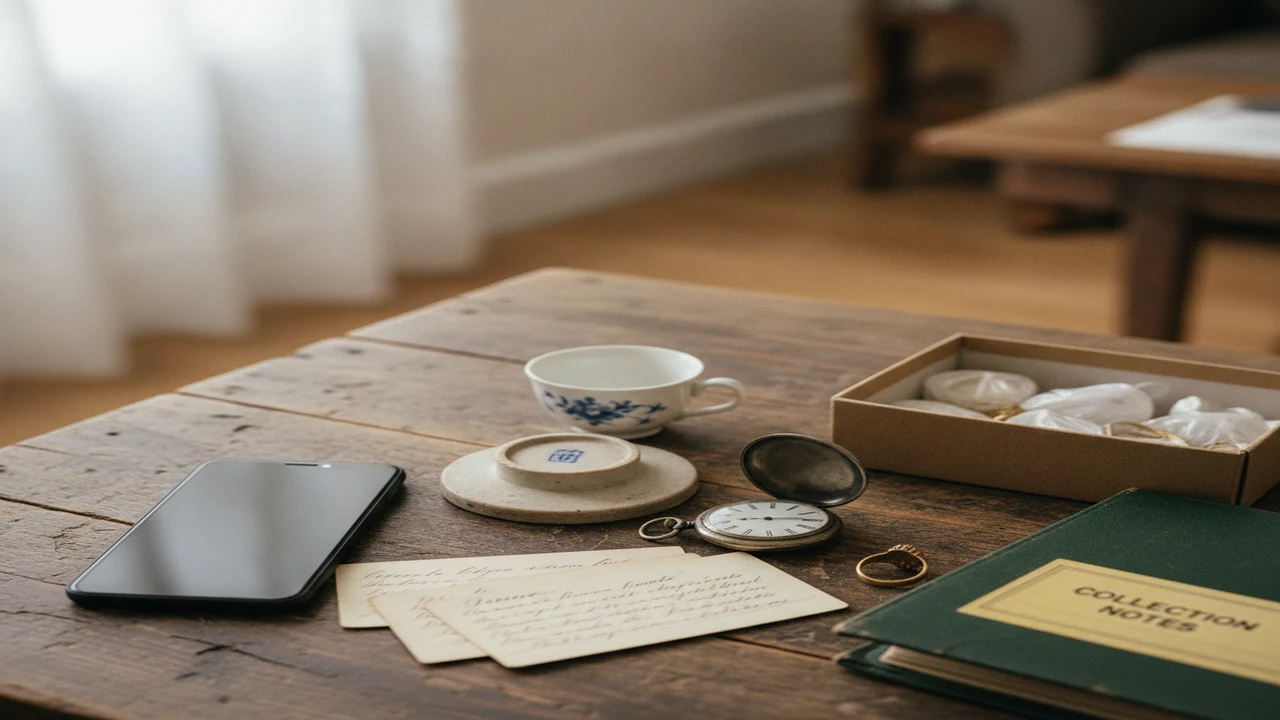
For a binder or shoebox workflow, photograph the front, back, base, damage, label, hallmark, and maker signature before filing the record. Add dimensions and the date of the value reference. Google Lens is a sensible free starting point when you have only one object and do not need collection storage.
- Clear scan limits and recurring billing terms
- Marks, hallmarks, signatures, materials, and period clues
- Condition and provenance note fields
- Saved collections with editable records
- Dated and understandable value guidance
- Export or backup options that reduce lock-in
Which antique apps have the strongest listed feature sets?
The shortlist depends on what happens after the first photo. A picture-led workflow such as appraise antiques by picture is most useful when it preserves marks, condition, and supporting images instead of reducing the object to one suggested name.
Antique Identifier TIQ lists photo identification, value ranges, authenticity clues, and collection features. That makes it a listed-feature option for people who want identification and records in one place, but its output should still be checked against external references.
AntiqSnap: Antique Identifier highlights unlimited premium scans, collector learning articles, and a digital collection organizer. Antique Identifier - Relic focuses on antique era identification and a USD value estimate, while its identification, history, comparison, and collection functions require a subscription.
Curio - Antique Identifier lists historical background, craftsmanship information, a digital antique collection, and PDF collection export. Antique Identifier By Picture emphasizes photo upload, image cropping, and background object removal, which may help when a cluttered image makes the subject hard to isolate.
Exact offers can vary by store, region, and date. Inspect each live purchase screen for the billing period, trial conversion, renewal cost, and which functions remain available without payment.
Which paid features are useful for binders and shoebox collections?
For a labeled binder, create one record per object or document sleeve. Use a consistent order: overview photo, marks, dimensions, material, condition, provenance notes, suggested identity, and the date attached to any value range. Our guide to collection records, fees, permissions, and exports explains why portability matters when a catalog grows.
For an unsorted shoebox, photograph everything before trying to identify individual pieces. Assign a temporary number to each item, then capture labels, backs, edges, hallmarks, and damage. This prevents similar pieces from being mixed up and makes later corrections easier.
For one potentially higher-value object, spend more time documenting construction and condition. Furniture may need joinery, underside, hardware, drawer, and label photos. Porcelain and ceramics benefit from base marks and repaired-area images. Jewelry needs readable hallmarks, while an antique watch value search should include the dial, case, movement, and serial markings where safely accessible.
Antique Identifier TIQ may fit readers who want to search antiques by photo, identify maker signatures, and save an antique collection. iPhone users can inspect the current Antique Identifier App listing for device compatibility, its privacy label, and current in-app purchases.
Keep the value label precise. An antique market value range is not automatically an offer, insurance value, auction estimate, or certified appraisal. Save the date and source behind the range so you know when it needs updating.
How should you scan an antique before trusting the result?
Better documentation gives any visual search more evidence to work with. Clean only enough to expose markings safely. Do not polish metal, refinish wood, remove labels, or use aggressive cleaners merely to produce a clearer photograph.
Changing the crop, angle, background, or lighting may change an automated suggestion. Preserve the original images and written notes so that a new result does not erase earlier evidence. Antique Identifier TIQ is one example of an AI antique identifier by photo, but the same documentation process applies to any visual tool.
Cross-check close matches using Google Lens, reference books, museum collections, WorthPoint, auction archives, and sold-market evidence. The related guide on how to photograph a flea-market find and look up sold listings covers that follow-up workflow.
- Photograph the complete object in even light without hiding edges or proportions.
- Capture the underside, back, joinery, hardware, damage, labels, hallmarks, serial numbers, and maker signatures.
- Crop a duplicate image around the important mark while preserving the uncropped original.
- Record dimensions, weight where useful, apparent materials, purchase history, and family provenance.
- Scan more than one view rather than relying on a single attractive front image.
- Cross-check the suggested identity against sold examples, books, museums, or specialist databases.
- Save the photos, notes, suggested identity, condition, reference links, and value date together.
- Escalate unusual or valuable objects to an appropriately qualified specialist.
Which permissions and privacy terms should you check?
Read the current store privacy label and the publisher's privacy policy before uploading family heirlooms, receipts, ownership documents, or images that reveal where valuables are kept. Store disclosures can change, so check them when you are ready to install or renew.
Review camera access, photo-library scope, account requirements, analytics, device identifiers, cloud storage, deletion requests, and collection export. When the phone supports limited photo access, select only the images needed for identification rather than granting the app the entire library.
Object photos can reveal addresses, faces, reflections, room layouts, serial numbers, and valuable household contents. Crop unrelated details and remove location metadata where appropriate. Avoid uploading receipts or provenance documents unless the service clearly needs them and its retention terms are acceptable.
Saved records also create a portability question. Check whether they can be downloaded, what format is available, and what happens after account deletion or subscription cancellation. See our privacy and export comparison for collection apps for a broader checklist.
When is an antique app subscription worth the cost?
For one-off curiosity, begin with Google Lens, sold listings, or a limited free tier. Paying every week or month makes little sense if you only need a possible category for one vase and have no reason to store or export a collection.
An active collector may get more value from repeated scans, identification history, comparable-object research, organized records, and export tools. A seller or estate organizer may also benefit when the app reduces duplicate data entry across many objects.
Check whether the offer is weekly, monthly, or annual; when a trial becomes paid; whether scans are capped; which history or export tools require premium access; whether family sharing applies; and where cancellation is handled. Also find out whether saved records remain readable after payment stops.
Relic illustrates why this check matters: its identification, history, comparison, and collection functions are described as subscription features. Antique Identifier TIQ should likewise be judged by its live offer and the number of objects you realistically expect to process each month, not by the appeal of one scan.
What are the limits of antique identification by picture?
All major accuracy, valuation, and professional-appraisal cautions are consolidated here. A photo result is best used as a research lead, with stronger evidence gathered before money, restoration, insurance, or ownership decisions are made.
Which antique app should you choose?
Choose by workflow rather than searching for one universal winner. Antique Identifier TIQ is a listed-feature option for iPhone users who want photo identification, value ranges, authenticity clues, and saved collection records.
Curio - Antique Identifier is the notable listed fit when PDF collection export is the deciding feature. AntiqSnap: Antique Identifier may suit buyers prioritizing premium scanning and learning material. Antique Identifier - Relic offers compact era and USD estimate records, while Antique Identifier By Picture stands out for listed image-preparation controls.
Verify the live price, renewal period, privacy label, cancellation route, and record-access rules before purchasing. For one mystery object, start with a free visual search. A paid plan makes more sense when repeat cataloging, saved evidence, and exports reduce ongoing manual work.
Comparison
| App | Best listed fit | Identification details | Value guidance | Collection tools | Payment or listing caveat |
|---|---|---|---|---|---|
| Antique Identifier TIQ | Photo-led research and saved records | Object identification, authenticity clues, marks, and signatures | Listed value ranges | Saved antique collection | Check the live iPhone purchase screen |
| AntiqSnap: Antique Identifier | Premium scanning and collector education | Object, material, and condition suggestions | Pricing guidance and collection tracking | Digital collection organizer | Premium lists unlimited scans; inspect current renewal terms |
| Antique Identifier - Relic | Compact era and value records | Identity, era, materials, condition, and origin | USD value estimate | Subscription collection functions | Core identification, history, comparison, and collection tools require payment |
| Curio - Antique Identifier | Exportable collection records | Historical background and craftsmanship information | Value range and similar-object references | Digital antique collection and PDF export | Inspect current limits and purchase options |
| Antique Identifier By Picture | Photo preparation | Photo upload, image crop, and background object removal | Suggested value, age, material, and period | Stores identified finds | Check current advertising and payment disclosures |
| Google Lens | Free initial visual search | General visual matches and related pages | No dedicated antique valuation workflow | No specialist antique catalog | Useful starting point, not a formal antique appraiser |
Limitations
Photo identification is a research lead, not proof of maker, age, authenticity, or value. Similar makers, regional variants, reproductions, replaced components, faint marks, reflective surfaces, wood species, metals, and manufacturing periods can be confused or remain uncertain.
Some AntiqSnap reviews report incorrect material or wood suggestions and difficulty separating reproductions from genuine antiques. Some Antique Identifier By Picture reviews describe changing results, advertising, and maker or region errors. These are individual review themes, not measured failure rates or universal findings.
Curio's historical information and comparable-object approach does not turn its estimate into a certified appraisal. Condition, restoration, provenance, regional demand, auction fees, shipping constraints, and the date of comparable sales can materially change realized value. Our explanation of why a photo estimate is not a formal appraisal covers the distinction in more detail.
Store listings, subscriptions, permissions, and privacy labels can change after the article date. Consult a qualified specialist for high-value sales, insurance, estates, taxes, conservation, disputed authenticity, legal documentation, or objects where an incorrect cleaning or repair decision could cause damage.
Frequently Asked Questions
What is the best app to identify antiques?
The best choice depends on the object category, how often you scan, whether you need collection records or exports, and which privacy and subscription terms you accept. For occasional identification, start with a free visual search and sold-market research.
Can an antique identifier app tell whether an item is genuine?
It may surface antique authenticity clues such as marks, construction details, or similar examples, but it cannot guarantee authenticity. Reproductions, replacement parts, restoration, and faint markings often require specialist examination.
Can Antique Identifier TIQ estimate antique value from a picture?
Its listing includes value ranges, but the output is a research clue rather than a certified appraisal, guaranteed sale price, insurance valuation, or authenticity decision. Cross-check the date, condition, and relevant sold examples.
Is an antique appraisal app suitable for furniture and large objects?
It can help organize initial research. Photograph the full object, joinery, underside, hardware, labels, and damage. Local demand, shipping difficulty, restoration, and size can make the realized price differ from a broad estimate.
What photos should I upload to Antique Identifier TIQ?
Use a full-object image plus the back or underside, marks, signatures, hardware, labels, serial numbers, and damage. Preserve the uncropped originals, and do not polish, refinish, or remove labels for a cleaner image.
Are antique identifier apps safe for photos of family heirlooms?
Check current camera and photo permissions, use limited library access where available, and remove faces, addresses, reflections, and location clues. Read the service's current retention, deletion, account, and cloud-storage terms before uploading sensitive records.
Should I use an app or a professional antique appraiser?
Use an app for initial identification, cataloging, and comparable-object research. Consult a qualified specialist for high-value sales, insurance, estates, taxes, conservation, disputed authenticity, or legal documentation.