
Best Stone Identifier Apps in 2026
Quick answer: AI Rock ID is the best stone identifier app for most iPhone users because it gives you five free scans per day and covers rocks, crystals, minerals, gemstones, and fossils. Rock Identifier: Stone ID is the better Android choice. Pick Rockd when you need geological maps and field context instead of photo scanning.
You find a striped stone on the beach, take six photos, and get three different answers online. A stone identifier app can narrow the field before that rock spends another decade in a kitchen drawer.
The catch is that photo identification has limits. We ranked these apps by useful free access, stated prices, specimen coverage, platform support, recent updates, and the quality of the information returned. A scan is a starting point. Valuable or unusual specimens still need physical tests and, sometimes, a gemologist.
Comparison at a glance
| App | Best for | Platforms | Free version | Price | Standout |
|---|---|---|---|---|---|
| AI Rock ID | Most iPhone users | iPhone and iPad | Five scans per day | $29.99 yearly or $4.99 weekly | Rocks, fossils, gemstones, and value estimates |
| Rock Identifier: Stone ID | Android and older iPhones | iPhone, iPad, and Android | Free download; current scan limit unclear | Listed purchases from $3.99 to $69.99 | Catalog claims over 6,000 specimen types |
| Crystalyze | Crystal collections and spiritual reference | iPhone, iPad, and Android | Three identifications per day | Annual purchases listed from $19.99 | Crystal library, notes, and wishlists |
| Rock & Crystal Identifier | Crystal Council collections | iPhone, iPad, and Android | Three scans advertised; access may vary | $29.99 yearly, $5.99 monthly, or $1.99 weekly | Scanning linked with collection records |
| Crystal Identifier | No-account web scanning | Web | One scan per day | Check the site | Works in a browser without an account |
| AllScan AI | Scanning rocks and other objects | Web | One web scan | Check the site | Identifies many object categories |
| Rockd | Geological maps and field notes | iPhone, iPad, Android, and web | Free access; no scan quota | Free | More than 290 geological maps |
| Mindat | Checking mineral and locality records | Web and mobile web | Web access without per-scan charges | Free web access | Mineral photos, occurrences, and localities |
Prices and ratings from the US App Store and Google Play, checked October 2026. Store prices change; the listing is the final word.
How we picked
We read the US App Store listings for the five listed iOS apps, available Google Play details, official sites, pricing pages, and help material. Ratings, prices, device requirements, and update dates were checked in October 2026.
The ranking favors the person who wants to photograph an unknown stone and get a useful candidate quickly. Rating totals show audience size, so they did not decide the order. AI Rock ID ranks first despite being newer because its free limit and annual price are stated plainly, and its scope matches this search closely.
- Photo identification covers ordinary rocks and minerals.
- The free limit is useful before payment.
- Annual cost and billing periods are stated.
- Results include facts that can be checked.
- The app runs on the reader's device.

AI Rock ID
4.6 on the App Store (576 ratings)
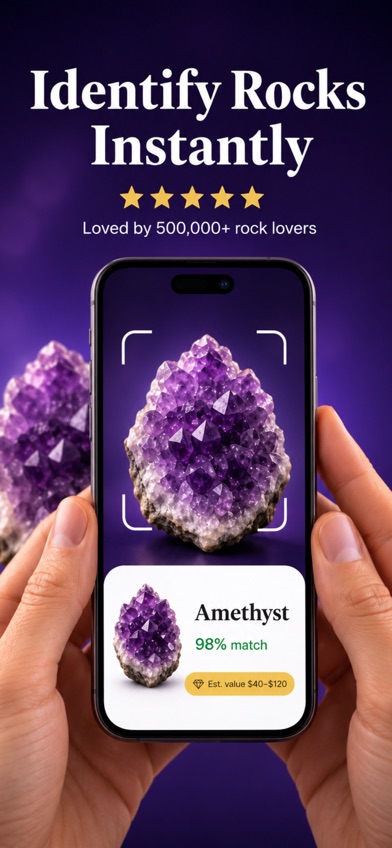
AI Rock ID is an iPhone and iPad rock identification app for rocks, crystals, minerals, gemstones, and fossils. Each result can include a candidate name, formation, Mohs hardness, composition, rarity information, look-alikes, and an estimated value range. You can save scans in a collection.
The deciding fact is its free allowance: five scans per day. That is enough to photograph several finds or compare angles without starting a trial. Premium costs $29.99 per year or $4.99 per week. Paying weekly for 52 weeks would cost $259.48, so the annual plan is the sensible choice for anyone staying subscribed.
Its 4.6-star App Store rating comes from 576 ratings, far fewer than Rock Identifier's 81,888. We still rank AI Rock ID first because audience size does not fix vague pricing or free limits. It was updated August 3, 2026. The large catch is device support: it requires iOS 18.0 or later, has one listed language, and has no confirmed Android version.
- Five free scans every day
- Covers fossils as well as stones
- Annual price is stated
- Requires iOS 18.0 or later
- No confirmed Android app
- Price
- Five daily scans free; $4.99 weekly or $29.99 yearly, checked October 2026
- Platforms
- iPhone and iPad
Pick AI Rock ID if you have a recent iPhone and want several free scans before paying.

Rock Identifier: Stone ID
4.7 on the App Store (81,888 ratings)
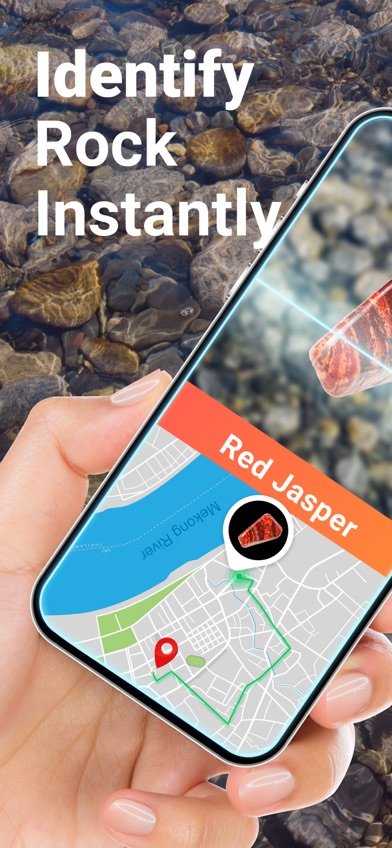
Rock Identifier: Stone ID is a photo scanner for rocks, minerals, crystals, and gemstones. Its listing says the catalog covers more than 6,000 types and returns details such as chemical formula, hardness, color variations, and common locations. It also has collection tools and articles about distinguishing real gemstones from imitations.
This is the broadest mainstream choice here: it runs on Android, iPhone, and iPad, supports 14 languages, and works on iOS 15.0 or later. The US App Store shows 4.65 stars from 81,888 ratings. That is useful evidence of a much larger audience, though it does not tell you whether one particular scan is correct. The app was updated September 23, 2026.
Pricing is the weak spot. The App Store lists purchases from $3.99 to $69.99, with several entries carrying the same Premium name; the billing periods and current free scan allowance are unclear. Check the checkout screen before accepting a trial. This app beats AI Rock ID on Android support, older iPhones, languages, and track record.
- Android and iOS support
- Works on iOS 15.0
- Fourteen listed languages
- Current free limit is unclear
- Purchase names obscure billing periods
- Price
- Free download; listed purchases range from $3.99 to $69.99, checked October 2026
- Platforms
- iPhone, iPad, and Android
Pick Rock Identifier: Stone ID if you use Android or an iPhone that cannot run iOS 18.

Crystalyze
4.8 on the App Store (3,422 ratings)
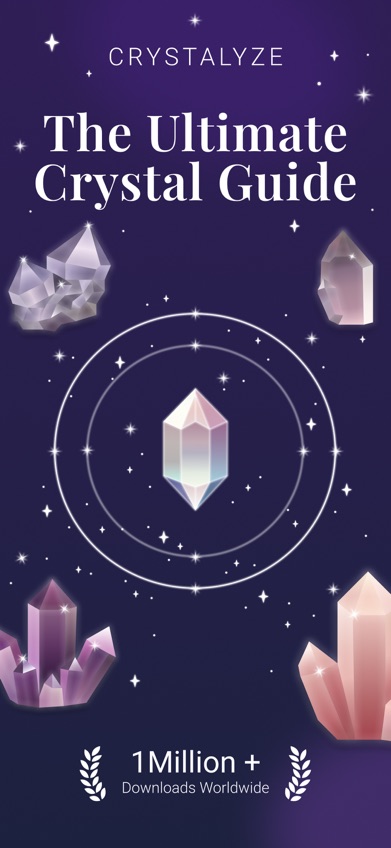
Crystalyze puts crystal identification inside a library and collection organizer. You can scan a specimen, browse information on more than 175 crystals, add notes, and sort items into owned, favorite, or wishlist groups. The free version reportedly includes three identifications per day.
Its real strength is everything around the scan. Filters cover chakra, zodiac, planet, element, and stated metaphysical properties; there is also a moon calendar and journal. That makes Crystalyze a better fit than AI Rock ID for someone cataloging crystals as part of a spiritual practice. A geology student will probably find much of that material beside the point.
The US App Store rating is 4.75 stars from 3,422 ratings, and the app was updated October 6, 2026. Listed purchases include monthly plans from $2.99 to $5.99 and annual plans from $19.99 to $34.99, so confirm the current checkout price. It supports iOS 15.0 or later, iPad, and Android. Unlimited identification and permanent scan history require Premium.
- Three reported free daily scans
- Notes and collection lists
- Recently updated
- Focuses heavily on spiritual uses
- Unlimited scans require Premium
- Price
- Monthly purchases from $2.99 and annual purchases from $19.99, checked October 2026
- Platforms
- iPhone, iPad, and Android
Pick Crystalyze if crystal journaling and collection lists are as important as identification.
Rock & Crystal Identifier (Crystal Council)
4.6 on the App Store (2,779 ratings)
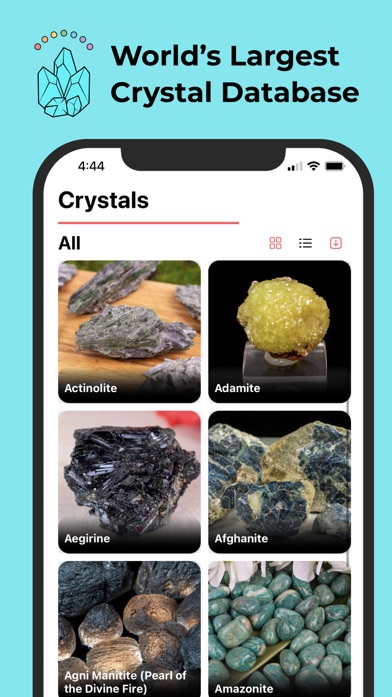
Rock & Crystal Identifier scans rocks, polished stones, jewelry, and crystals from photos. Its listing claims a catalog of more than 6,000 specimens. Results can feed into a collection with photos, notes, origins, and categories.
The app leans toward crystal meanings, planetary associations, emotions, and shopping for related specimens. That mix will suit an existing Crystal Council customer. If you only want mineral chemistry, the shopping and spiritual sections add clutter. Three free scans are advertised in current materials, although the exact working allowance was not clear enough for us to treat it as firm.
Premium is listed at $1.99 weekly, $5.99 monthly, or $29.99 yearly. A full year paid weekly would be $103.48, which makes the annual option far cheaper. The iOS app has 4.57 stars from 2,779 ratings, requires iOS 15.6 or later, and was updated September 18, 2026. Android is also available. It has collection depth, but AI Rock ID states its free allowance more plainly.
- Collection photos and notes
- iOS and Android support
- Stated annual price
- Free access is not fully clear
- Shop content adds friction
- Price
- $1.99 weekly, $5.99 monthly, or $29.99 yearly, checked October 2026
- Platforms
- iPhone, iPad, and Android
Pick Rock & Crystal Identifier if you already use Crystal Council content or its shop.
Crystal Identifier
Crystal Identifier is a browser-based scanner for crystals, stones, and minerals. You upload a JPG, PNG, WebP, or HEIC image and receive a proposed name plus details such as crystal system, Mohs hardness, formation type, and estimated value. The stated upload limit is 50 MB.
There is no account requirement, and the site gives one free scan per day. That is useful on a borrowed computer or a phone where you do not want another subscription app. It also avoids device-version problems. You do, however, need to upload the specimen photo to a web service, so read the current privacy terms before sending images containing faces, location clues, or personal items.
Crystal Identifier is more focused on crystals than ordinary field rocks. It has no App Store rating, mobile app update history, or confirmed paid plan in the supplied information; check the site for current charges. One scan can produce a lead, but the browser tool is less useful for processing a tray of finds. The no-account setup is its reason to exist.
- No account required
- One free daily scan
- Runs in a browser
- No confirmed mobile app
- Only one free scan daily
- Price
- One scan per day is free; check the site for paid pricing
- Platforms
- Web
Pick Crystal Identifier if you want one quick crystal scan without installing an app.
AllScan AI
AllScan AI is a general image scanner that includes rocks among plants, animals, insects, coins, food, antiques, and products. You upload an image in a browser, and the service returns a likely identification with explanatory text. The web scanner accepts common image formats up to 50 MB.
Its advantage is scope. Someone who photographs a mineral, a mushroom, and an old coin on the same hike may prefer one general scanner. A dedicated stone identifier app has better room for mineral fields such as hardness, streak, crystal habit, and chemical formula. AllScan AI is therefore a broad first pass, not our first choice for building a mineral collection.
The site states that one web scan is free. Current subscription pricing, recurring limits, store ratings, and a dedicated AllScan AI mobile listing were not confirmed, so check the site before paying. As with any upload scanner, crop out people, addresses, and location data when those details are irrelevant. Pick a specialist when the result could affect a purchase or appraisal.
- Many identification categories
- Browser-based upload
- One free web scan
- Less mineral detail
- Paid pricing is unclear
- Price
- One web scan is free; check the site for current paid pricing
- Platforms
- Web
Pick AllScan AI if rocks are only one of many objects you want to identify.

Rockd
4.4 on the App Store (187 ratings)
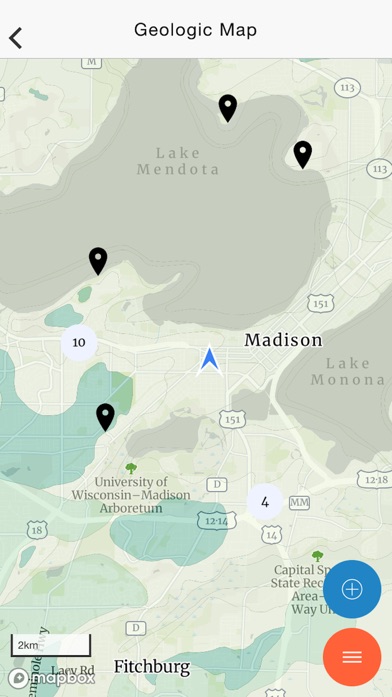
Rockd is a free geology field app, not a conventional rock scanner app. It uses your location to show mapped geological units, local summaries, stratigraphy, height above sea level, and related literature. More than 290 geological maps are available, with map caching for areas where cell service fades.
That context can be more useful than another photo guess. If you know a specimen came from a mapped limestone unit, you have evidence that a camera cannot read from color alone. Rockd also records field observations, strike and dip, trend and plunge, and offline notes. It is the strongest choice here for geology students, field workers, and rockhounds documenting where a specimen came from.
Rockd is free and has no per-scan quota because it does not identify hand specimens from photos. The iOS app has 4.38 stars from 187 ratings, requires iOS 16.6 or later, and was updated June 12, 2026. Android and web access are also available. Skip it if your only goal is pointing a camera at a tumbled stone on the kitchen table.
- Free geological maps
- Offline field observations
- Location-based context
- No one-tap specimen scan
- Requires some geology reading
- Price
- Free, checked October 2026
- Platforms
- iPhone, iPad, Android, and web
Pick Rockd if the specimen's location and surrounding geology are part of the identification.
Mindat
Mindat is a web mineral database with photographs, mineral names, locality records, associations, and occurrence data. It does not provide the same one-tap photo scan as the apps above. Its job is verification once a scanner gives you a candidate name.
Suppose an app calls a specimen fluorite. Mindat lets you compare photographs, check where fluorite occurs, and see minerals commonly found with it. That evidence is useful when color alone points toward several candidates. Mindat is the strongest reference in this list for provenance and locality research, and it does not meter access by scan count.
The trade-off is work. You need a possible name, locality, or mineral property to search, then compare records yourself. There is no confirmed dedicated iPhone or Android app in the supplied information, though the site works through a mobile browser. Basic web access is available without a per-scan charge; separate paid plan details were not confirmed. Use Mindat after a scanner, especially before labeling a rare or valuable specimen.
- Detailed locality records
- Large photo reference
- No scan quota
- No one-tap photo identification
- Requires manual comparison
- Price
- Basic web access is free; check the site for any paid options
- Platforms
- Web and mobile web
Pick Mindat if you already have a candidate identification and want evidence to check it.
AI Rock ID vs Rock Identifier: Stone ID
These are the closest choices for someone who wants a conventional photo scanner. AI Rock ID wins our ranking through stated free access and simpler annual pricing. Rock Identifier wins on device reach, languages, and its much longer App Store record.
| Point | AI Rock ID | Rival |
|---|---|---|
| Free scanning | AI Rock ID gives five scans per day | Rock Identifier's current free limit is unclear |
| Annual price | AI Rock ID lists $29.99 per year | Rock Identifier lists several Premium purchases without clear periods |
| Platforms | AI Rock ID is limited to iPhone and iPad | Rock Identifier supports iPhone, iPad, and Android |
| Device requirement | AI Rock ID requires iOS 18.0 | Rock Identifier works on iOS 15.0 |
| App Store record | AI Rock ID has 4.6 stars from 576 ratings | Rock Identifier has 4.65 stars from 81,888 ratings |
For a recent iPhone, five daily scans make AI Rock ID easier to judge before paying. Its coverage of fossils, saved finds, mineral properties, and value estimates also fits mixed collections.
Rock Identifier is the easy winner for Android users, multilingual households, and older iPhones. Its far larger rating count also gives buyers more store feedback to read, though its current subscription terms need close attention.
What to check before downloading a rock scanner
Treat the result as a shortlist
A photograph records color, shape, texture, and visible crystal structure. It cannot measure hardness, streak, specific gravity, or chemical composition. Look for an app that provides candidate names and comparable properties, then test those properties safely. Use a mineral reference or qualified expert for rare specimens, purchases, scientific labels, and anything advertised as valuable.
Calculate a full year of access
Weekly plans look cheap until multiplication gets involved. AI Rock ID costs $259.48 across 52 weekly payments but $29.99 on its annual plan. Crystal Council's weekly plan reaches $103.48 in a year, compared with $29.99 annually. Check the renewal screen, trial length, scan quota, and cancellation route before confirming payment.
Match the tool to the specimen
A general scanner is fine for a common garden rock. Crystal collectors may want collection lists and information about polished stones, while field geologists need maps, local formations, and offline notes. Fossils are another dividing line: coverage varies. Decide what you collect before paying for a catalog full of material you will never open.
Check device and setup requirements
AI Rock ID needs iOS 18.0, while Rock Identifier runs on iOS 15.0 and Android. Browser tools avoid installation and storage concerns, but they may have smaller free quotas. Also check language support and account requirements. These details become annoying at the exact moment you are standing outside with poor reception and a muddy specimen.
Review photo and collection privacy
Rock photos can include faces, home interiors, receipts, GPS metadata, or recognizable locations. Read the current privacy policy to learn how uploads and saved collections are stored, shared, and deleted. Crop unrelated details and remove location metadata if provenance is not needed. A private collection record is useful only if you know where its data goes.
Frequently asked questions
What is the best free stone identifier app?
AI Rock ID is the strongest free photo option for recent iPhones because it includes five scans per day. Android users should check Rock Identifier's current free allowance before subscribing.
How accurate are rock identifier apps?
Rock identifier apps can suggest plausible names, but photo results are not confirmation. Compare hardness, streak, density, locality, and crystal form before labeling a specimen.
Can an app identify a stone from one photo?
One clear photo may identify a common specimen, but several angles and a fresh surface can improve the candidate list. Similar minerals often require physical tests.
Why does a rock scanner give different results each time?
Lighting, angle, background, weathering, and reflections change the visual information in each photo. Use natural light, fill the frame, and compare repeated results instead of accepting one answer.
Which app is best for geological maps?
Rockd is the best choice here for geological maps, mapped units, field observations, and location context. Rockd is free and includes more than 290 maps.
Where can I verify a mineral identification?
Mindat is a strong reference for comparing mineral photographs, locality records, occurrences, and associated minerals. Mindat works in a web browser without a per-scan quota.
Can a stone identifier app tell me what a rock is worth?
Some apps provide estimated ranges, but a photo cannot confirm weight, treatment, authenticity, or condition. Use a qualified appraiser before buying, selling, or insuring a specimen.
Are rock identification photos private?
Privacy depends on the service's current policy and permissions. Remove faces, addresses, and unneeded location metadata before uploading a specimen photo.
Our recommendation
Choose AI Rock ID if you have an iPhone or iPad running iOS 18: five free daily scans, broad specimen coverage, and a stated $29.99 annual price make it the easiest option to assess. Android users should choose Rock Identifier: Stone ID. Rockd is better for field geology, while Mindat is the better second stop for checking a proposed identification.
Try AI Rock ID for five free scans per day
AI Rock ID's strongest advantage is simple and checkable: you get five free scans each day. That is enough to photograph several finds, compare another angle, and see whether the returned mineral details are useful before entering payment information. It suits iPhone and iPad owners with mixed collections of rocks, crystals, gemstones, and fossils. Skip it if your device cannot run iOS 18 or you need Android support.