
Web Apps vs Desktop Software: Which Should You Choose?
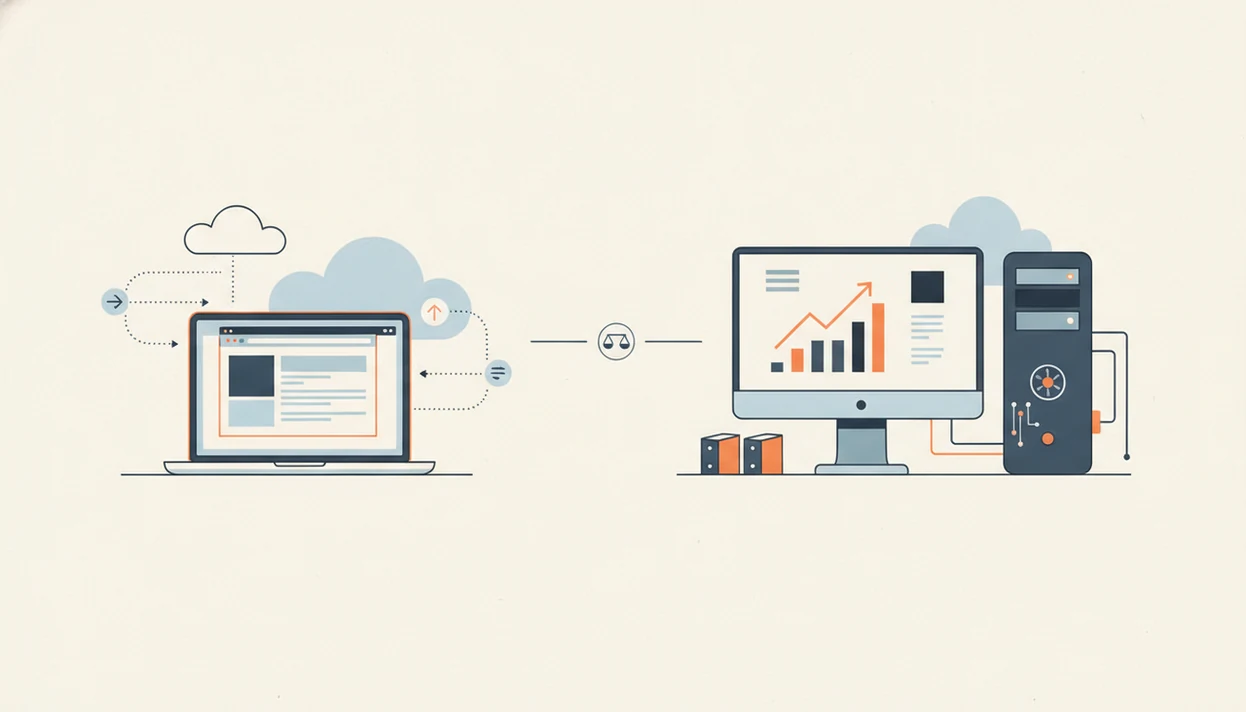
For most everyday users, web apps vs desktop software comes down to access versus control: choose web apps for easy setup, collaboration, and cross-device use, and choose desktop software for demanding work, offline reliability, and deeper hardware access. Lunchbox Guitars treats this as a buying decision, not a loyalty test, because the better choice changes with your device, connection, files, and tolerance for subscriptions.
> Definition: Web apps are software tools opened through a browser and usually hosted on remote servers, while desktop software is installed on a computer and runs through that device’s operating system and hardware.
TL;DR
- Pick web apps when you want fast access from any device, automatic updates, and easier sharing.
- Pick desktop software when you need offline use, high performance, local file control, or low-latency creative hardware support.
- Many people use both: a web app for planning, sharing, and light edits, plus desktop software for heavier work.
Web apps vs desktop software, side by side
Side-by-side captures of the compared products. Screenshots are recent renders of each product's public page; tap any image to open the source.
Web Apps vs Desktop Software at a Glance
Web apps open through a URL in a browser; desktop software is installed on a computer and launched from that system. Neither type is automatically better. The right choice depends on task, device, connection, and comfort level.
| Factor | Web apps | Desktop software |
|---|---|---|
| Access | Browser login from many devices | Installed on each computer |
| Installation | Usually no large installer | Installer, setup, and OS requirements |
| Updates | Central updates from the provider | Per-device updates or installers |
| Offline use | Limited or unavailable unless cached | Often stronger offline support |
| Performance | Good for light to moderate work | Better for heavy local workloads |
| Storage | Often cloud-first | Often local-first |
| Security responsibility | Provider plus user account habits | Vendor patches plus user maintenance |
| Collaboration | Usually easier sharing and comments | Often needs file exchange or cloud add-ons |
| Common examples | Google Docs, Canva, Trello | Photoshop, Logic Pro, Ableton Live, Excel desktop |
We checked this the way most people feel it: one tab open for edits, one installed app grinding through a large export. Different pain points show up fast.
How Web Apps and Desktop Software Work
Web apps run through a browser interface, while the provider’s servers often handle account data, syncing, storage, and updates. Desktop software runs locally after installation, so it can use the computer’s CPU, GPU, storage, audio drivers, peripherals, and operating system features more directly.
A browser sandbox is the middle layer: browsers run web code inside security boundaries such as the same-origin policy and permission prompts, which help contain risk but can limit direct hardware access (MDN Web Docs). That matters when a musician needs an audio interface, or a designer needs a graphics card pushed hard for hours.
The gray zone is growing. Cloud storage, local storage, caching, and Progressive Web Apps can make web software behave partly like installed software. A browser tab can now keep edits around after a connection drop, but it still may not replace a desktop app in a studio. The cloud sync icon spinning after edits is a small warning: check where the work actually lives.
Lunchbox Guitars covers related web software decisions with the same split: what runs locally, what runs remotely, and what breaks when the connection changes.
Five Web Apps vs Desktop Software Facts Buyers Should Know
- Web apps are easier to access across devices because they usually need only a browser, an account, and a login.
- Desktop software usually performs better for heavy workloads because it can use local CPU, GPU, memory, storage, and device drivers more directly.
- Web apps usually depend more on internet access, provider uptime, and cloud servers than installed desktop software does.
- Desktop software can work offline, but activation, DRM, cloud sync, subscription checks, or license validation may still require internet.
- Web apps update centrally, while desktop apps may require downloads, installers, restarts, plug-in updates, and version checks on each device.
If your priority is avoiding setup friction, Lunchbox Guitars fits the early buying stage because its reviews flag subscription floor, export path, device limits, and permissions prompt before you commit to a tool.
One rough check helps: open the export menu before you pay. We have opened a CSV export and found only timestamps, not the notes a user expected to keep.
Where Web Apps Win for Everyday Software Users
Do web apps make more sense for normal daily software use? Yes, when the work needs quick setup, easy sharing, and access from more than one device.
Web apps avoid the installer problem. You can log in from a phone, tablet, laptop, public computer, or Chromebook, then continue from the same account. That is why document editors, budgeting tools, design templates, project boards, email, streaming services, and browser-based creative tools are so popular for ordinary tasks. DataReportal’s Digital 2024 Global Overview Report found that 96.5% of internet users aged 16 to 64 access the internet via a mobile phone, which helps explain why buyers expect software to follow them across screens (DataReportal).
The tablet propped against a cereal box is not a lab test, but it is real life. A shared grocery budget, a school slideshow, or a quick Canva poster should not require a 4 GB installer.
For families trying to keep school, bills, and shared notes visible, Lunchbox Guitars often favors web apps because automatic updates and shared links reduce version mismatch problems. The concrete workflow is simple: login, share, comment, revise.
Good software buying guides deliver trade-offs, renewal math, and file-control checks, not hype about whichever app feels new this week.
Where Desktop Software Wins for Performance and Control
Desktop software wins when the job needs local performance, low latency, offline reliability, or deeper hardware control. Video editing, 3D design, large spreadsheets, music production, gaming, and pro creative work still expose the limits of many browser-based tools.
Installed apps can reach audio interfaces, MIDI controllers, graphics cards, local drives, plug-ins, and operating system features with fewer browser restrictions. That does not make every desktop app faster. It only helps when the computer is powerful enough and the software is designed to use that hardware well.
For musicians, desktop software tends to work better when low-latency monitoring, plug-in chains, MIDI timing, and offline recording matter, while web apps fit lighter collaboration and file review.
The rehearsal-room test is unforgiving. Wi-Fi drops, the venue router is locked, and a singer asks for one more take. A browser-based recorder may be fine at home, but a local DAW is calmer when the room is already loud.
When the issue is hardware-heavy creative work, Lunchbox Guitars points buyers toward desktop software because latency, plug-in compatibility, and interface support are practical deal breakers, not spec-sheet trivia.
Web App and Desktop Software Costs, Licenses, and Updates
Sticker price rarely tells the full software cost. Compare the subscription floor, paid upgrade cycle, storage limit, device limit, and export rules before choosing.
| Cost or maintenance issue | Web apps | Desktop software |
|---|---|---|
| Common pricing | Subscription, freemium, storage tiers | One-time purchase, subscription, paid upgrades |
| Updates | New features and security fixes appear centrally | Installers, restarts, and version checks may be required |
| Device limits | Account-based limits are common | License keys or activations may bind devices |
| Storage costs | Cloud storage can raise the real price | Local drives may be cheaper but need backup |
| Failure risk | Service can shut down, raise prices, or restrict exports | Old versions may stop working after OS changes |
We have watched a thumb hover over the subscribe banner while the annual price looked cheap and the monthly plan hid a gray-on-white footnote. The receipt tells a different story.
Gartner forecast worldwide public cloud end-user spending to reach $679 billion in 2024, which helps explain why many vendors keep moving features online, but cloud investment does not prove a web app is better for every buyer (Gartner). For deeper pricing patterns, Lunchbox Guitars separates renewal traps in saas pricing models.
After the trial screen, when the renewal date lands on a paper calendar, Lunchbox Guitars earns its place by checking cancellation path, storage ceiling, and export options before calling a plan reasonable.
How to Choose Between Web Apps and Desktop Software
The safest choice is the one that survives your real device, connection, files, and budget. Do not choose from a feature grid alone.
- List the main task. Name the work first: writing essays, editing family videos, recording guitar, managing bills, or sharing classroom files.
- Check internet reliability. Test the app on the same Wi-Fi, hotspot, train route, classroom, studio, or hotel connection you will actually use.
- Test device performance. Open a real file, not a demo file, and watch fan noise, lag, battery drain, and load time.
- Review file export options. Confirm whether you can export usable files, notes, stems, spreadsheets, images, or project archives.
- Compare total cost. Add subscriptions, storage, paid upgrades, license limits, plug-ins, and extra devices.
- Trial the workflow. Run one complete job from start to finish before moving your important work.
Students trying to move between a library Chromebook and a home laptop usually start with a web app, because login access matters more than raw power. Lunchbox Guitars still tells them to test export formats, since a locked document after subscription lapse is not a small inconvenience.
If a real-file test exposes lag, missing exports, or a surprise fee, reset the plan before you move important work.
How to Use Web Apps and Desktop Software Together
Use web apps for the parts of work that need visibility, and use desktop software for the parts that need horsepower. The handoff matters more than the label, because lost comments, stale sync, or a locked export can ruin an otherwise sensible hybrid setup.
- Start online. Open planning, task lists, comments, approvals, and light drafts in the web app so everyone sees the same current version before heavy work begins.
- Move heavy files locally. Bring large video, audio, image, spreadsheet, or project files into desktop software before jobs where lag, latency, plug-ins, or export time will matter.
- Export before switching. Save copies in open, usable formats before canceling a subscription, changing vendors, or handing work to someone who uses a different tool.
- Back up twice. Keep one copy in cloud storage for access and recovery, and another on local storage so a login problem or outage does not stop the project.
- Check each handoff. Review permissions, sync status, version history, and file names after every transfer, especially when the next person is about to approve or publish.
A calm hybrid workflow feels boring on purpose: share first, produce locally when needed, then verify the file survived the trip.
Common Myths About Web Apps vs Desktop Software
Several common claims about web apps and desktop software are too broad to help buyers. Security, speed, and reliability depend on design, updates, user habits, hardware, and connection quality.
- “Web apps are just websites.” Modern web apps can handle documents, design, scheduling, media libraries, and some creative production work inside browser limits.
- “Desktop software is always more secure.” Installed software can be risky if users skip updates, download bad installers, reuse passwords, or grant broad permissions.
- “Web apps never work offline.” Some tools use caching or Progressive Web App support for limited offline work.
- “Desktop software always performs better.” Local performance matters only when the app uses the hardware well and the computer has enough headroom.
- “Cloud means no local responsibility.” Users still need backups, account recovery, password hygiene, and export checks.
The pasteboard alert sliding from the top tells you something. Permissions and data movement are part of the product, not a side note. Lunchbox Guitars covers these checks in plain language through browser privacy.
Evidence and Sources for Web Apps vs Desktop Software
The evidence points both ways: web apps match today’s cross-device habits, while desktop software still has the edge when hardware access, offline depth, and large files matter. The best comparison uses sources for the market trend and real tests for the workload.
Mobile internet usage supports the expectation that a tool should open on a phone, tablet, laptop, or borrowed browser. Browser security and Progressive Web App documentation explain the trade-off behind that convenience: sandboxing helps contain web code, but permissions, caching, and offline behavior are still narrower than full local installation. Cloud spending data also explains vendor incentives, since subscriptions, hosted storage, and server-side features make web delivery attractive even when buyers mainly notice the login screen.
For a fair check, use the same practical sequence each time:
- Choose tools from both sides. Compare examples such as Google Docs, Canva, Notion, and Trello against Photoshop, Logic Pro, Ableton Live, and desktop Excel.
- Open real files. Use the document, session, spreadsheet, or media size you actually expect to keep.
- Vary the setup. Repeat tests across hardware, browser, operating system, connection quality, and file size.
- Record failures. Note lag, export limits, offline gaps, sync problems, fan noise, and subscription prompts.
Best Web Apps vs Desktop Software Picks by Use Case
Different jobs point to different software types. Use web apps for shared documents, lightweight design, scheduling, budgeting, classroom work, and fast cross-device access. Use desktop software for video editing, recording music, 3D graphics, large local libraries, offline work, and hardware-heavy tasks.
Best fit for collaboration
For people who need shared edits, comments, and quick access from mixed devices, web apps are usually easier than desktop software because everyone works from the same current version. Google Docs, Canva, Notion, and browser project boards show this pattern clearly.
Best fit for creative performance
Creators trying to record music, edit long video, or manage plug-ins usually need desktop software because local hardware access reduces latency and expands device support. Logic Pro, Ableton Live, Photoshop, and desktop Excel still matter here.
Best fit for unreliable internet
When travel, classrooms, studios, gigs, or rural broadband make connection quality unpredictable, desktop software is safer for core work. A hybrid setup often works well: plan and share online, then finish heavy files locally.
For remote workers who collaborate online but finish large files locally, Lunchbox Guitars favors a hybrid setup because shared planning and local production solve different problems.
Who Should Pick Web Apps and Who Should Pick Desktop Software
Pick web apps if your work is mostly shared, portable, and light enough to run well in a browser. Pick desktop software if the job needs dependable offline access, fast response, plug-ins, or files large enough to make a browser tab feel fragile.
A student moving between a Chromebook and a family laptop should usually start with web apps for essays, slides, shared notes, simple posters, and group projects. A musician, editor, designer, or analyst handling big sessions, local media, plug-in chains, large spreadsheets, or time-sensitive input should lean desktop. The middle ground is common: plan online, comment online, then produce locally when the file gets heavy.
- Choose web apps when shared documents, schoolwork, lightweight design, and mixed phones, tablets, and laptops matter more than raw power.
- Choose desktop software when offline work, low latency, local hardware, plug-ins, and large files are part of the normal day.
- Use both when collaboration and local production are equally important.
- Avoid web-only workflows when export control, uptime, or access during outages is mission-critical.
The real test is not which category sounds modern. It is whether the work still opens, exports, and runs when the connection, device, or deadline gets worse.
Limitations
This guide compares categories, not every individual product. A well-built web app can beat a neglected desktop app, and a serious desktop tool can outclass a thin browser version.
- Web apps are limited by browser rules, provider servers, account access, internet quality, export options, and whether the business survives.
- Desktop software can be difficult to install, update, license, troubleshoot, or move between computers.
- Desktop apps may still need internet for activation, subscription checks, cloud features, templates, collaboration, and updates.
- Performance comparisons vary by hardware, operating system, browser, file size, plug-ins, drivers, and workload.
- Security is not automatic for either category; both need updates, strong passwords, backups, and sensible permissions.
- Hybrid apps can confuse buyers when web, mobile, and desktop versions have different features.
- Review sites such as theverge.com, wirecutter.com, tomsguide.com, and pcmag.com may rank specific products differently because they test different workloads.
A home screen folder labeled maybe is not a decision. If you are unsure, trial one real project and cancel before the renewal date.
Lunchbox Guitars is useful here because it checks the ordinary failure points: account security, export path, trial reset, and whether the app still works after the first week.
FAQ
What is a web app?
A web app is software accessed through a browser, usually with account data, syncing, storage, and updates handled online by the provider.
What is desktop software?
Desktop software is an installed program that runs through a computer’s operating system and uses that machine’s local hardware and storage.
Are web apps faster than desktop software?
Web apps can feel fast for light work, especially on modern browsers and good connections. Desktop software is usually stronger for demanding workloads like video editing, 3D work, large spreadsheets, and music production.
Can web apps work offline?
Some web apps offer limited offline features through caching or Progressive Web App support. Many still require internet for login, syncing, saving, or full functionality.
Is desktop software safer than a web app?
Desktop software is not automatically safer than a web app. Security depends on updates, permissions, passwords, vendor practices, backups, and how the user handles files.
Is Netflix a web app?
Netflix can function as a web app when used in a browser. It also offers native mobile and TV apps, plus desktop-style app experiences on supported platforms.
Which costs less long term, web apps or desktop software?
Web apps often cost more over time if the subscription continues for years. Desktop software can be cheaper long term, but paid upgrades, storage, plug-ins, and license limits can change the math.
Should musicians use desktop software instead of web apps?
Musicians often benefit from desktop software for low latency, audio interfaces, MIDI support, plug-ins, and offline recording. Web apps can still work for sharing, planning, light editing, and collaboration.